

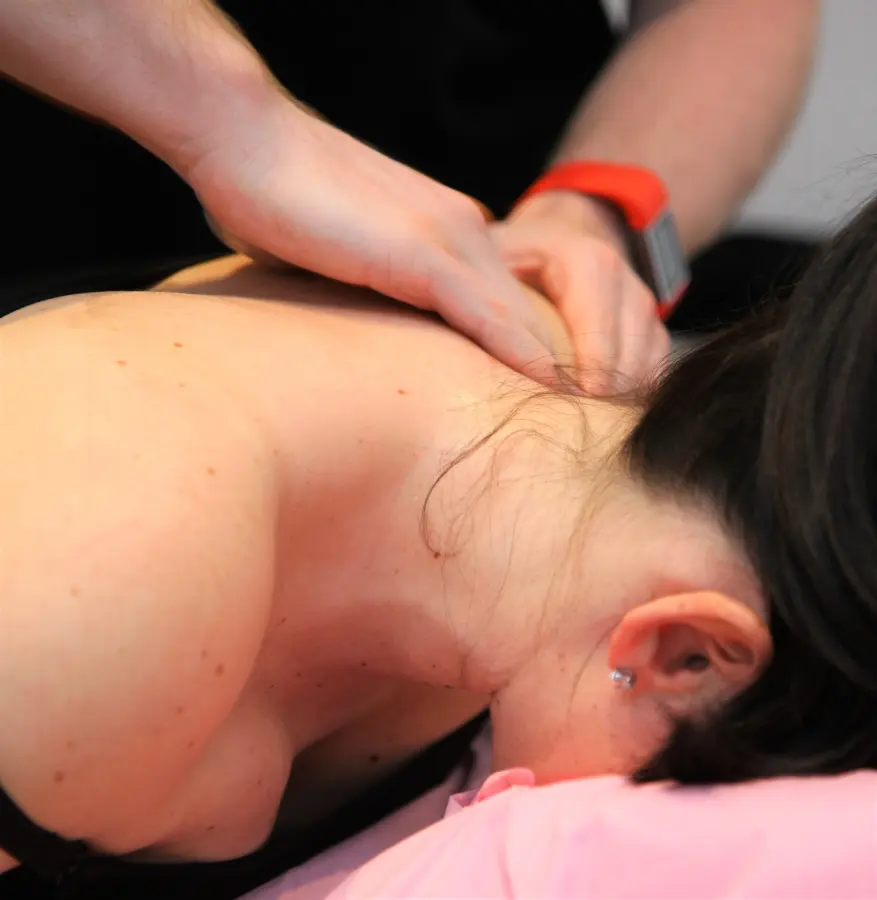
Headache & Migraine
Tired of headaches taking over your life?
Whether it’s waking up with
At Katie Bell Physiotherapy &
You don’t have to keep
Heather Morton specialises in the treatment and management of headaches and migraines. With a particular focus on these conditions, she can help you understand your symptoms and explore ways to manage them, supporting you in finding relief and improving your quality of life.
People who are living with recurrent headaches or migraines and want to understand whether Physiotherapy may improve their symptoms.
They may experience:
- Headaches that repeatedly start around the neck or back of the head
- Headaches associated with neck pain or stiffness
- Headaches that seem to change sides
- Recurrent headaches that have become difficult to manage
- Migraine symptoms alongside neck symptoms
- Headaches that are affecting work, exercise, sleep or social activities
- Frustration that previous treatments have only provided temporary relief
Importantly, you don’t need to have neck pain for the neck to be relevant to your headache. We recognise that disorders of the upper cervical spine (neck) can contribute to headache and migraine, and a skilled examination can help determine whether this is relevant to an individual patient.
Typically, patients where the neck is contributing to their headache or migraine say:
- “It starts at the base of my skull and comes over my head.”
- “It feels like my headache starts in my neck.”
- “Sometimes it’s on the left and sometimes it’s on the right.”
- “My neck feels really stiff before I get a migraine.”
- “I get this pain at the back of my head that spreads forwards.”
- “It feels like there’s a pressure building up in my head.”
- “I can feel it coming on from my neck.”
- “My headaches keep coming back even though I’ve tried everything.”
- “I’ve been told it’s a migraine, but I also have a lot of neck pain.”
- “It often starts after sitting for long periods.”
- “It was worse after I had that [insert medical/dental procedure here].”
- “I’ll have one glass of wine and wake with a severe headache the next day.”
- “I just want to understand what’s actually causing my headaches.”
Headache presentations vary considerably, and you may experience one or all of these:
Head symptoms
- Pain at the back of the head
- Pain around the temples or forehead
- Pain behind the eye
- One-sided or two-sided head pain
- Head pain that changes sides
- Pressure, aching or throbbing
- Pain that travels from the back of the head towards the front
Neck symptoms
- Neck pain
- Neck stiffness
- Reduced neck movement
- Discomfort around the upper neck or base of the skull
However, neck pain isn’t essential. An upper cervical disorder can be relevant even when someone doesn’t experience obvious neck pain.
Migraine-associated symptoms
Someone may also experience:
- Nausea
- Sensitivity to light
- Sensitivity to sound
- Visual symptoms or aura
- Dizziness
- Difficulty concentrating
- Fatigue
The important point is that these symptoms don’t automatically mean the headache is “caused by the neck”. Instead, the assessment helps establish whether there is a meaningful relationship between the person’s headache and their upper cervical spine.
Migraine
Migraine is a primary headache disorder, rather than simply a muscular or neck problem. It can involve moderate-to-severe headache, nausea and sensitivity to light and sound, with some people experiencing aura.
The upper cervical spine can be relevant in people with primary headache disorders, including migraine. The aim of Physiotherapy Assessment is to establish whether there is also a relevant cervical component that can be addressed.
Tension-type headache
Tension-type headache commonly feels like pressure or tightness around the head. Some people also have associated neck symptoms.
Assessment can help determine whether the upper cervical spine is contributing to the person’s symptoms.
Cervicogenic headache
Cervicogenic headache is a secondary headache originating from the upper cervical spine. It can occur with or without neck pain.
Utilising the Watson Headache approach, the examination aims to identify whether there is a specific upper cervical disorder that reproduces and then modifies the person’s familiar head pain.
Headache with a cervical contribution
Someone can have a diagnosis such as migraine while also having relevant upper cervical findings.
It is important to remember:
Having migraine doesn’t rule out the neck being relevant, and having neck symptoms doesn’t automatically mean your headache is cervicogenic.
The assessment helps establish whether the neck is actually contributing.
Using The Watson Headache approach places particular emphasis on disorders or dysfunction within the upper cervical spine and how signals from this region interact with the head through the trigeminocervical system. (Watson Headache)
Potential contributors may include:
- Dysfunction within the upper cervical spine
- Reduced or altered upper cervical movement
- Sensitivity within upper cervical structures
- Previous neck injury
- Sustained or repetitive neck loading
- Changes in physical activity
- Musculoskeletal factors around the neck and upper back
Other factors such as sleep, stress, workload, exercise, jaw tension and lifestyle can also influence someone’s headache experience.
The key thing to note is:
These factors may influence or aggravate headaches, but they are not necessarily the underlying cause.
When should somebody NOT see us first?
Not every headache is appropriate for physiotherapy.
If you have:
- a sudden, severe or unusual headache
- a new headache accompanied by neurological symptoms
- a headache following significant trauma
- you feel acutely unwell
You should seek appropriate medical assessment rather than booking physiotherapy first.
Prior to any treatment, our Physiotherapists will always undergo a comprehensive screening for red flags and instability before examination or treatment.
Getting to the root of your headaches
Your assessment isn’t simply a check for “tight muscles”.
We’ll first take a detailed history of your headaches, including:
- Where your headache starts
- Where it travels
- Whether it changes sides
- How often it occurs
- How long it lasts
- What your symptoms feel like
- Whether you experience nausea, dizziness, visual symptoms or sensitivity to light/sound
- Whether you experience neck pain or stiffness
- What seems to bring your symptoms on or make them worse
- Previous injuries and treatments
- Your general health and relevant medical history
We’ll then examine your upper cervical spine and related structures.
A key part of the Watson Headache Approach is identifying whether specific upper cervical movements or sustained manual assessment can reproduce your familiar head pain and, importantly, whether that familiar pain changes or lessens as the examination is sustained.
This gives us information about whether the upper neck is actually relevant to your headache rather than simply assuming that it is.

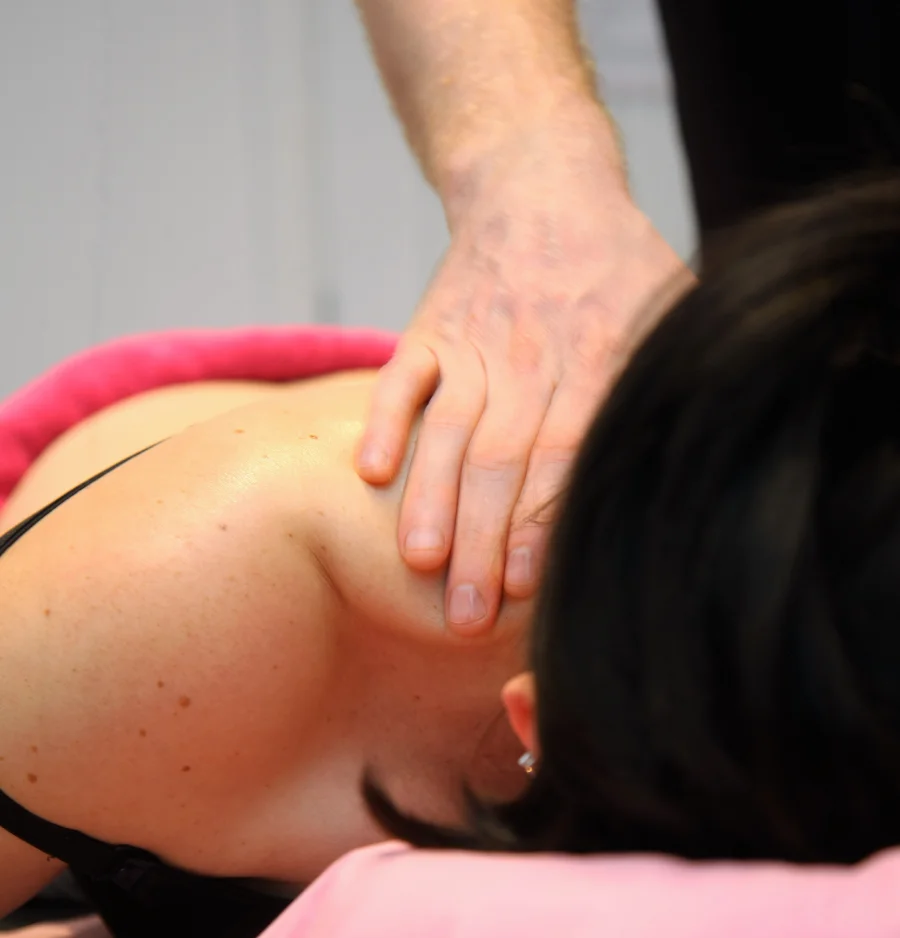
What we’re trying to establish
We’re asking:
“Is there a meaningful relationship between this person’s headache and their upper cervical spine?”
If there isn’t, that is useful information too.
This is important because the Watson approach is designed to confirm or rule out an upper cervical contribution, rather than automatically treating every headache as a neck problem.
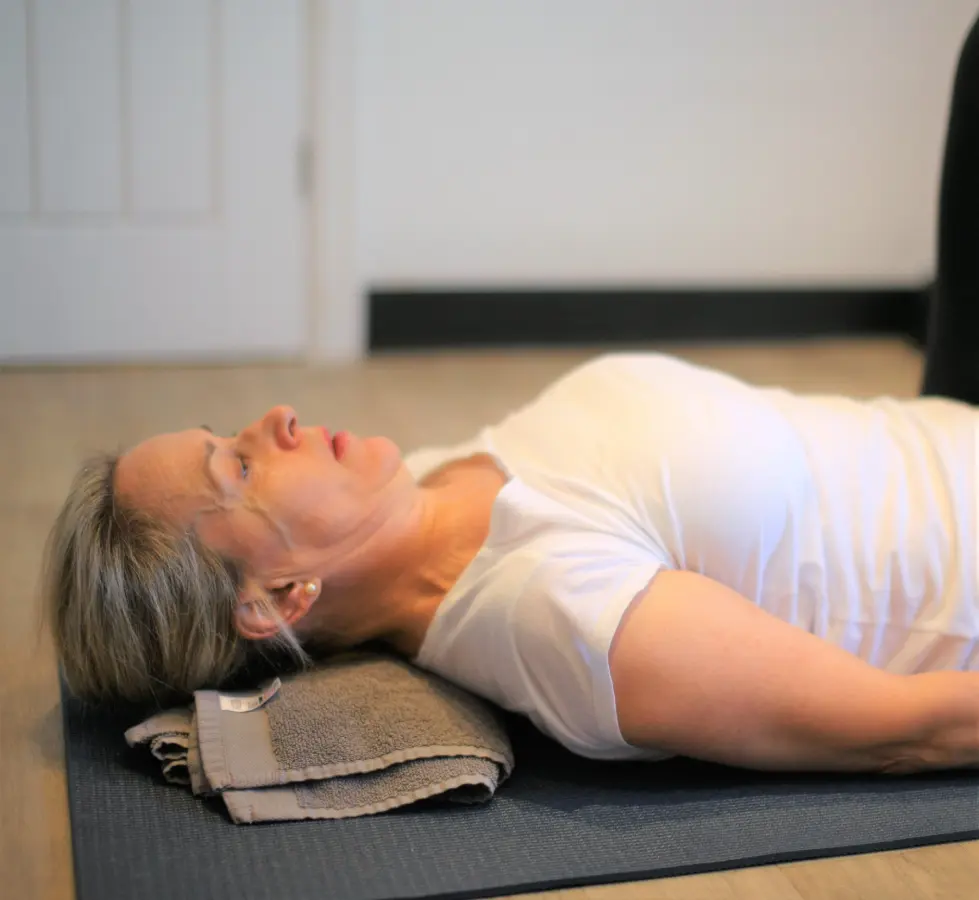

How we can help you feel better
Watson Headache Approach
We use the Watson Headache Approach. Our Clinical Specialist Physiotherapist, Heather has completed Level 2 training with Dr Dean Watson in Adelaide, Australia.
The Watson Headache Approach uses precise, non-manipulative manual techniques to assess and treat relevant dysfunction in the upper cervical spine. It does not involve forceful neck manipulation or “cracking”.
The techniques are applied progressively and carefully, with the patient remaining in control throughout the examination and treatment.
Why treat the upper neck?
The upper cervical and trigeminal systems are closely connected within the nervous system. This means signals from the upper neck can interact with the systems involved in processing head pain.
If your assessment identifies a relevant cervical disorder, treating it may help reduce the musculoskeletal input contributing to your headache experience.
Exercise and rehabilitation
Once we understand your presentation, treatment may also include:
- Specific neck exercises
- Cervical control and endurance
- Upper-back strengthening
- Mobility exercises
- General strength and conditioning
- Gradual return to exercise
- Advice around activity and loading
The aim is not simply to provide temporary relief. It’s to help you understand and manage the factors that influence your symptoms.
Education
Understanding why your symptoms behave the way they do can itself be valuable.
We’ll explain what we’ve found, whether we think your neck is relevant, and what you can do between appointments.
The goal isn’t to promise that you’ll never experience another headache.
Instead, we’re looking to understand what is contributing to your symptoms and address the factors that we can influence.
Depending on your presentation, this may mean:
- Fewer headache days
- Less severe headaches
- Shorter or less disruptive episodes
- Improved neck movement
- Reduced neck symptoms
- Less sensitivity around the head and neck
- Greater confidence exercising
- Better understanding of your symptoms
- More effective self-management
- Less disruption to work, sleep and social activities
For someone with migraine, the goal may be to reduce the musculoskeletal contribution and overall impact of their attacks, rather than suggesting that physiotherapy can cure migraine.
What do people usually try before coming to us?
Many patients may have tried:
- Pain medication
- GP appointments
- Massage
- Chiropractic or osteopathic treatment
- Acupuncture
- Stretching
- Pilates
- Yoga
- Different pillows
- Heat or ice
- Changing their workstation
- Avoiding exercise
- Trying to reduce stress
- Online headache exercises
Some may have experienced temporary relief but found that the headache keeps returning.
Your questions answered
Specialist headache care, tailored to you
Specialist headache assessment
At Katie Bell, headache assessment goes beyond asking where your pain is and checking whether your neck feels tight.
With the Watson Headache Approach training, we can specifically assess whether the upper cervical spine is contributing to your headache or migraine.
We don’t assume your headache is “just your neck”
The Watson approach is about confirming or ruling out a relevant upper cervical disorder. That distinction is important.
Precise, non-manipulative treatment
Treatment uses specific, progressive manual techniques rather than forceful neck manipulation or “cracking”.
We combine specialist assessment with physiotherapy rehabilitation
Where appropriate, treatment can combine the Watson approach with:
- Exercise
- Strengthening
- Mobility
- Postural and movement strategies
- Load management
- Pilates
- Broader lifestyle and self-management advice
We look at the individual, not just the diagnosis
Two people with “migraine” can have very different presentations.
Our aim is to understand your headache behaviour, your symptoms and your individual contributing factors, then build treatment around what we actually find.
Heather Morton and her team are here to help you understand your symptoms and explore the right support for you.
Get in touch with Katie Bell Physio to find out how we can help.
Team
Meet The Team
Get In Touch
If you have any questions or would like to book an appointment you can send us a message, email us, call us or book online.
Reception
Katie Harben
Registered Office:
- Katie Bell Physiotherapy & Wellness ,346 Ecclesall Road South, Sheffield, S11 9PU
